

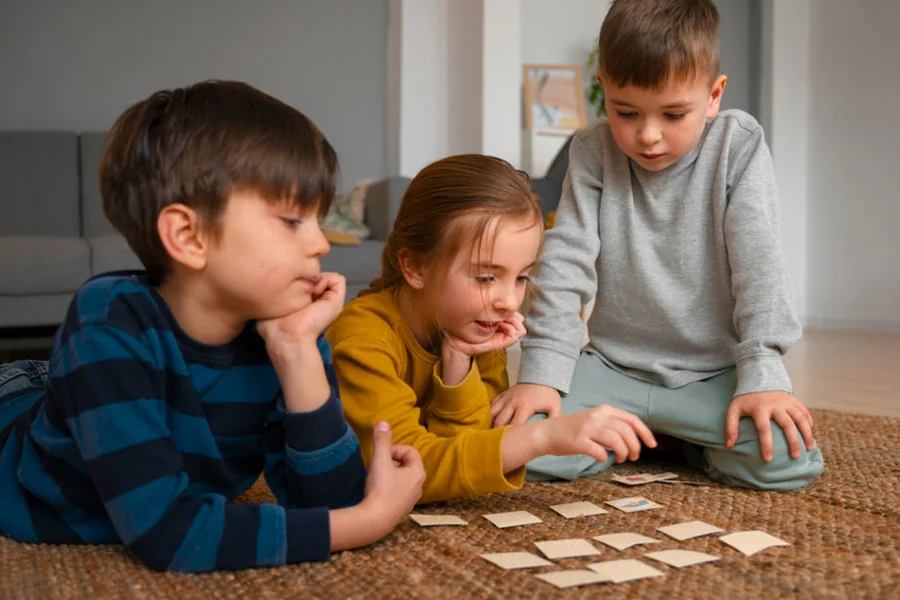
Learning With Games Fparentips for Smarter Education
Children learn best when they are interested, active and emotionally involved. While traditional learning methods are still significant, it is increasingly accepted that learning is best enjoyed through interactive activities. Learning With Games Fparentips is about the role that educational games can play in supporting children’s development; enhance academic skills; and make learning more positive.
Games are no longer thought of as just something for fun. Most parents and teachers now realize that games can assist kids in their development of creativity, communication, emotional confidence, and critical thinking. Games in education are designed to motivate children to learn and engage in active learning, whether in digital or physical format.
When learning is repetitive or stressful children tend to lose interest. Games provide incentives, challenges and excitement to get children to keep learning. They also promote social interaction, collaboration, and independent problem solving.
The number of educational games today has grown with the help of modern technology. Whether it’s mobile apps, online learning platforms, board games or classroom activities, there are more tools than ever for parents to help learn at home and in school. Pupils have fun being taught through games.
The benefits of playing games for children are numerous
The nature of games is to foster participation and engagement. Games demand active participation, decision making and interaction, as compared to the traditional memorization approaches. This aids children to better grasp information.
Motivation is one of the key benefits of game-based learning. It’s easier for kids to practise difficult things when they’re fun and rewarding, and they’ll do it more often. Learning can be fun, rather than stressful, with math games, spelling challenges and educational puzzles.
Games can also be adapted for various learning styles. It’s important to recognize that some kids learn best by seeing a demonstration, others by doing an activity, and others by hearing. Many educational games utilize several learning techniques, which aids to engage more kids.
The other advantage is instant feedback. Numerous games give children immediate feedback on their answers, enabling them to learn from their mistakes promptly. This fosters confidence and an ongoing improvement process.
Games also aid in the improvement of problem solving skills. Strategy games, puzzles and memory exercises help children to develop their thinking, planning and decision making skills under pressure. These skills are useful both in the classroom and in the community.
Games also help to ease fear of failure. In many games, errors are not considered bad, but rather a learning opportunity. This establishes a better outlook on the difficulties and pushes them to try again.
Interactive learning enhances learning
Interactive learning keeps children engaged and active in lessons and activities. Children do not merely listen or read but are actively involved in problem-solving, answering questions, and completing tasks.
An educational advantage is that memory retention is improved. Memorization can be facilitated by children through action, repetition, and emotional responses. Games make learning experiences memorable and enhance understanding.
Educational games also enhance language development. Children practice speaking skills and develop their vocabulary through word games, storytelling and communication challenges. Games used in reading helps in the development of literacy among younger learners.
Games make many children’s learning of mathematics easier. Counting exercises, number puzzles, and logic puzzles make abstract concepts more tangible and relatable.
As well as entertainment, Game-based learning can be used for learning in the field of science and creativity. Construction of games, experiments, simulation activities stimulates curiosity and imagination. Children learn through experimentation, observation and problem solving in an innovative way.
A successful interactive learning approach can also enhance class engagement. Some children are shy or nervous when learning in the school, but a game environment is better, they feel comfortable learning.
Educational games and modern education
Technologies have transformed how children are learning and how they are engaging with learning materials. As digital learning games are entertaining and skill developing, this is why they are increasingly utilized in schools and at home.
Learning applications and websites teach math, reading, science, coding and language skills. Many programs adapt the level of difficulty in accordance with the child’s development and provide individual learning experiences.
The benefit of Digital learning games is access. With tablets, smartphones and computers, children can work out educational tasks almost anywhere. This flexibility helps to enable learning outside the class time.
Digital games also stimulate independent learning. Children like doing things on their own and amassing rewards, thereby developing confidence and self-motivation.
But it’s important to strike balance. Too much screen time could have a negative impact on sleep, concentration and physical activity. Use should be monitored by parents and children should also be given time for off-line activity, outdoor play and social interaction.
The selection of age appropriate education is also crucial. Not every game has educational content; parents and teachers should choose games which are truly based on learning and skills.
In combination with active parental involvement, technology is best. Learning together, asking questions and playing games together can make learning results and family relationships better.
Making games a tool for supporting learning
Parents are a significant contributor to children’s success with learning games. Home-based learning supports children’s curiosity and motivation.
Using the learning that can be linked to daily activities is one way that can be done. Valuable skills can be taught in a natural way through board games, puzzles, cooking measurements, and storytelling. Learning can occur outside of the classroom.
Concentrate on encouragement, not pressure, from the parents. Children learn best when they are nurtured, not judged. Confidence and motivation is built through praise and improvement.
Establishing a healthy screen-time limit with digital learning games is important. Parents can make well-balanced schedules which involve learning, exercise, interests and relaxation.
When you engage in games with each other, it creates a bond and that helps you communicate. Family game time helps to encourage teamwork, discussion and shared experiences and contributes to educational development.
Parents can also use their observations of a child’s interests to select appropriate learning activities. Some children love creative games, others like logic puzzles, strategy games or story making activities. When matching the games with their interests, this makes them more engaged.
It is also important for parents to foster social learning experiences. The ability to cooperate, be patient, communicate and understand others are learned through group games, which have a positive effect on emotional and social development.
Games and Emotional and Social Development
Educational games are more than just about academics. They also have a positive impact on emotional intelligence and social development.
Some games help children to deal with challenges, frustration and competition in a healthy manner. Emotional resilience is developed by learning to lose gracefully, and then trying again.
Team work promotes communication and collaboration. Children share ideas, listen and problem solve together. These social skills are significant for friendships, schools and work.
Children learn also to build up their confidence by playing games. Achievement, puzzle solving or score improvement provides a sense of achievement that lifts self-esteem.
The creative games promote imagination and expression. Drawing games, stories and role playing games help children to express their thoughts and feelings positively.
In addition, some educational games are designed to help children understand and be aware of their emotions. Engaging in activities that are story based can help to build children’s emotional awareness and increase understanding of different point of views.
There is also reduction in stress. Participating in fun activities establishes a less stressful environment, enhances emotional health and bolsters the benefit of learning.
Managing fun and learning is a challenge
The successful learning games are an entertaining combination of learning value. Games which are perceived as excessive schooling can make children disinterested. Games that are primarily for entertainment purposes, on the other hand, may not offer much in terms of education.
Care is needed in the choice of activities. Children should be challenged, but not over-challenged, when playing education games. Differentiates the tasks according to age to keep students motivated and engaged.
Physical activity should also continue to be a component of balanced learning. The movement activities, sports and outdoor games benefit children’s physical health and cognitive development. Active play enhances focus and activity.
Parents and teachers should promote diversity in learning experiences. Integrating digital games, creative projects, reading, puzzles and hands-on activities will lead to more comprehensive skill development.
Moderation is essential. Learning games must not be a substitute for socialization, sleep, physical activity or family interaction. Good habits promote learning and good health.
Learning through games is not only for achieving academic success, but also for developing positive attitudes towards learning. Curious and motivated children are likely to be more confident and enjoy learning in the long-run.
Final Thought
The Interactive Education is becoming more and more relevant in the development of children, as it is presented Learning With Games Fparentips. Through educational games, children are able to develop academic skills, creativity, emotional confidence and social skills without losing fun of the learning process.
Games promote active learning, critical thinking, and problem solving, which sometimes can’t be achieved in a traditional learning method alone. Children are kept engaged and motivated by educational activities (both digital and physical).
Parents and teachers are key facilitators of children’s balanced and meaningful learning experiences. The selection of suitable games, fostering engagement and establishing healthy practices are essential to maximizing the benefits of game-based learning.
The future of technology in education is sure to continue as it is, but the end result is always the same: help children to learn and gain confidence and curiosity in the learning process. With properly applied, they may be effective learning tools that make learning more fun, interactive and effective.
FAQs
What is Learning With Games Fparentips?
Learning With Games Fparentips refers to educational strategies that use games to improve learning, creativity, and child development.
Why are educational games effective for children?
Educational games increase engagement, motivation, memory retention, and problem-solving skills through interactive learning.
Can games improve academic performance?
Yes, many educational games help improve skills in math, reading, language learning, and critical thinking.
Are digital learning games safe for children?
Digital learning games can be safe when parents choose age-appropriate content and maintain healthy screen time limits.
How do games help social development?
Team-based and interactive games teach communication, cooperation, patience, and emotional understanding.
What types of games support learning best?
Puzzle games, strategy games, storytelling activities, educational apps, and hands-on learning games are often highly effective.
How can parents support game-based learning?
Parents can participate in games, encourage balanced routines, select educational content, and create supportive learning environments.
Should children only learn through games?
No, games should complement traditional learning methods rather than replace reading, classroom instruction, and real-world experiences.
